
Celebrated, Then Silenced: The Burden of Menstruation in Walikale, DRC
Learnings and reflections from a menstrual health project in Walikale, DRC.
In Walikale, Democratic Republic of the Congo (DRC) menstruation is both celebrated and silenced. At menarche, a girl’s first menstrual cycle, families may welcome her into womanhood. But soon after, the silence sets in. Talking openly about menstruation is considered shameful, questions often go unanswered, and secrecy becomes the rule.
This silence has real consequences. Without accurate information, safe menstrual hygiene management (MHM) products, or private facilities, girls and women manage their menstruation in extremely challenging conditions. For many, menstruation is not just a biological routine but a source of stress, withdrawal, and self-exclusion.
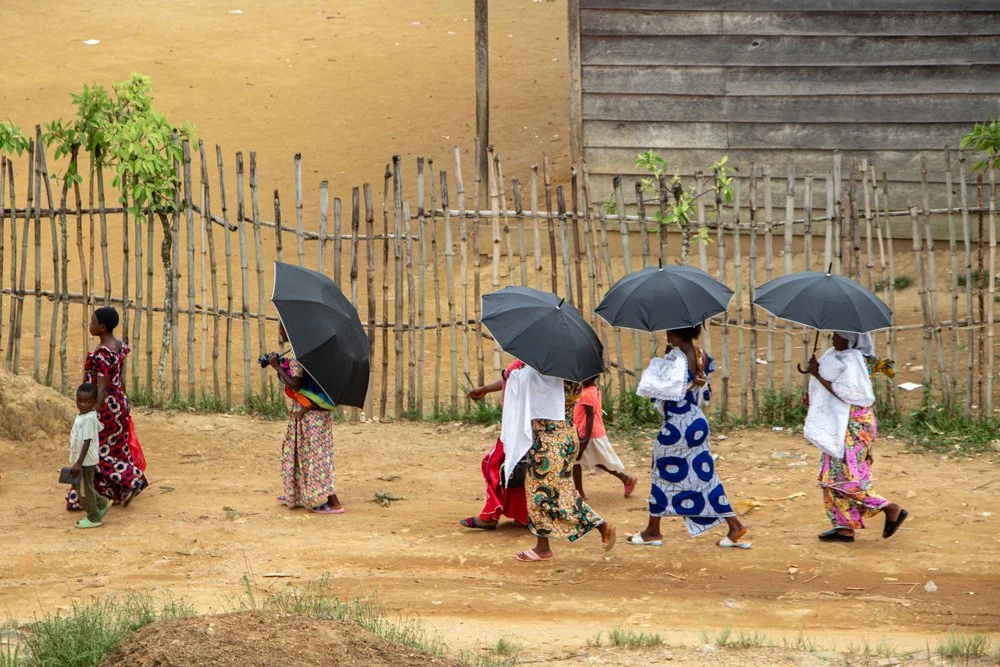
© MSF Marion Molinari. Walikale, Democratic Republic of Congo. 2024
Looking closer at Walikale
Walikale in East DRC is one of the most fragile and insecure contexts in Africa. Decades of conflict and displacement have weakened health and social systems, while rising inequality and repeated waves of violence have left women and children especially vulnerable. Médecins Sans Frontières (MSF) has been the only organisation consistently supporting reproductive health in the area since 2012.
Against this backdrop, MSF Inclusive Innovation — a collaboration between the MSF Sweden Innovation Unit and the Manson Unit’s Innovation Team in MSF UK — set out to better understand how menstruation is experienced in Walikale and whether a new solution could make a difference.
In this article, we provide an overview of the study we conducted and its outcomes.
Study at a glance
Where and when: Walikale General Hospital, North Kivu, DRC (Oct 2024–Jan 2025)
Who: 171 people (141 women and girls; 30 men and boys), with follow-up interviews from 89 women and girls after 3 months
What we did: We combined surveys, focus groups, and participatory activities to explore menstrual beliefs, norms, and lived experiences. Each woman and girl also received four pairs of menstrual underwear and a hygiene kit (bucket, soap, rope, clothespin). Three months later, participants returned to share how well these new tools worked in their daily lives.
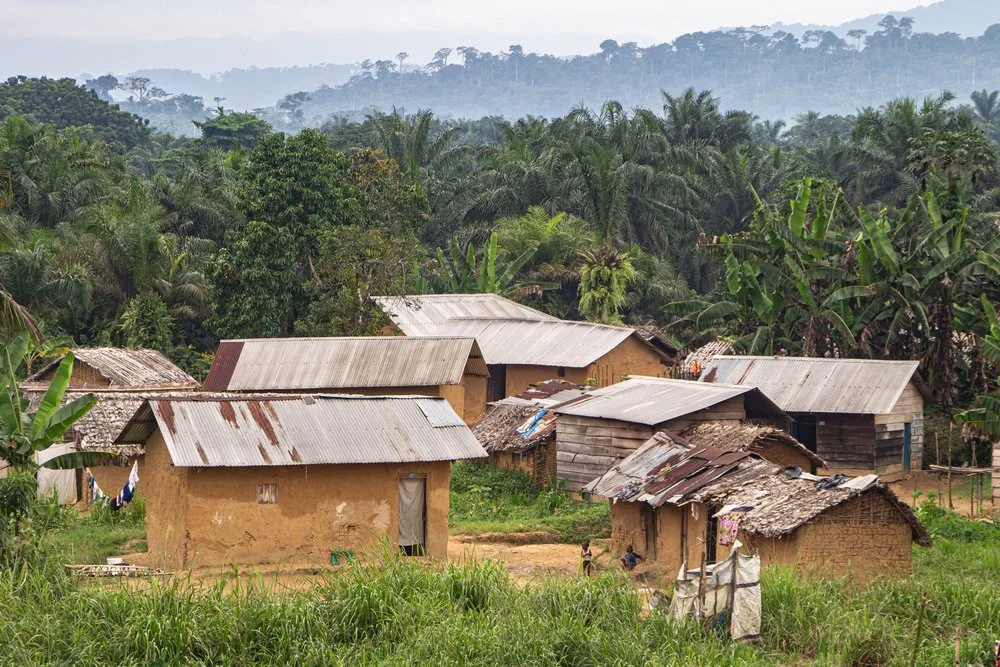
© MSF Marion Molinari. Walikale, DRC. 2024
Study findings: The current reality in Walikale
Periods without products
In Walikale, nearly 1 in 3 women (32%) reported currently having no access to menstrual products.
In Walikale, menstrual products are scarce, and choices are almost nonexistent. Women and girls often rely on old cloths or scraps of mattress foam to manage their periods. These makeshift materials are unreliable and unhygienic, potentially even causing infections. Menstrual leaks and stains are considered deeply shameful. They not only break the taboo by revealing a woman’s period but are also seen as a sign of poor management. Without reliable products, many women and girls face their periods with deep anxiety, fearing exposure and social stigma.
Nowhere safe to manage menstruation
72% women and girls said the latrines they used were not adequate for changing menstrual products.
There is also a lack of suitable spaces for menstrual hygiene practices in Walikale. This includes safe and private spaces with access to water and soap, around the home as well as in community settings to maintain menstrual hygiene with dignity. To manage their menstruation whilst balancing the pressures of the taboo, women and girls seek out increasingly remote spaces, such as the bush. Menstrual management in these circumstances prioritises speed, but without access to water and soap, this challenges hygienic practices.
Menstruation’s double identity
In Walikale, menstruation carries a double identity. On one hand, menstruation is normalised as a biological phenomenon, linked to becoming a woman and celebrated in the ability to producing children. On the other, it is pathologised as something dirty or contaminating, a sickness that pollutes people and places. These beliefs, held by both women and men, fuel the taboo that surrounds periods.
The result is silence: 42% of women and girls said they never speak to anyone about menstruation.
The secret everyone already knows
Talking about or breaking the secrecy of menstruation is considered morally and socially unacceptable. This silence leaves women and girls without answers to their questions, without reliable information, and without support when problems arise. Instead, women and girls in Walikale carry an emotional burden by bottling up and dismissing their own questions and concerns.
“I do not talk to anyone, I feel afraid, and I feel ashamed.” Female Participant
“No debate, no discussion, people keep quiet… people feel afraid of talking about it, they feel like they cannot talk about it.” Male Participant
The weight of secrecy shapes daily life. Fearing leaks or ridicule, many women and girls are forced to withdraw during their menstruation, staying home from school, skipping church, avoiding markets or work. Self-isolation feels safer than the risk of exposure, but it comes at a high cost of potential lost education, reduced income, and separation from community life. For many, these sacrifices are seen as preferable to the greater fear of public shame. In Walikale, managing menstruation is not just about products or facilities it’s about carrying a burden of a secret — even though everyone knows it exists.
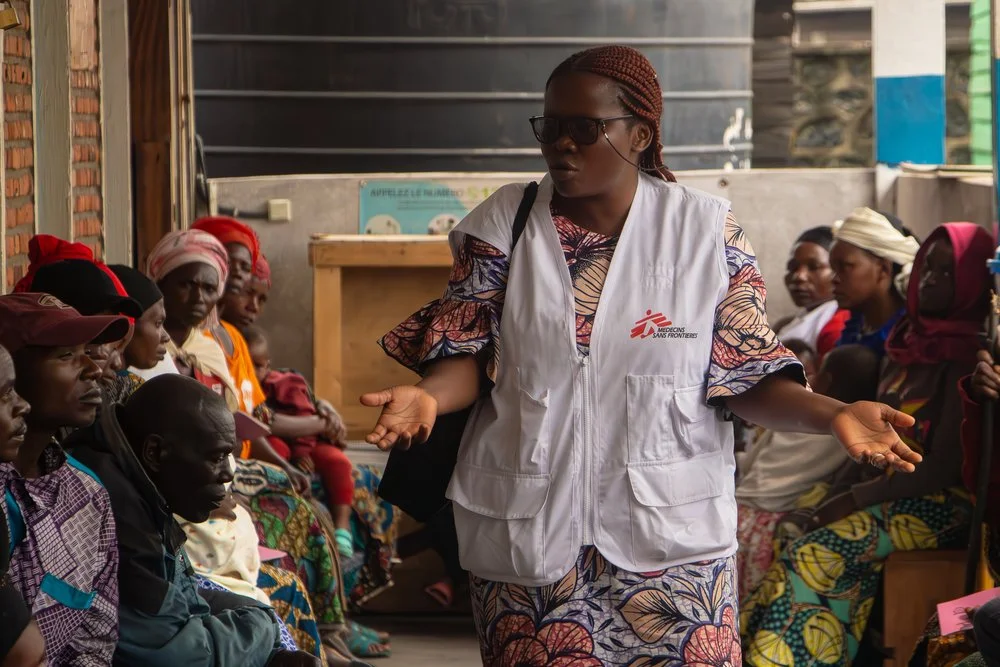
© MSF Marion Molinari. Kayaruchinya, DRC. 2024.
Testing a new option
During the study, we introduced menstrual underwear to see if they would be usable and acceptable within the Walikale community. Three months later, almost every woman was still using them.
100% of women and girls reported the underwear was acceptable, and all said they would recommend it to a friend.
For many, the underwear transformed their experience of menstruation. It improved dignity, reduced the constant anxiety that periods often brought, and allowed women to keep the “secret” of menstruation without carrying it as a heavy burden. They described feeling more confident and freer to carry out daily activities, with less fear of leaks or stains.
“I wore my underwear without any problem. I went to the field, I cultivate, I carry baggage from the farm until home, I wasn’t afraid that I would bleed over. I was every day feeling myself. Free.” - Female Participant
“I was able to do everything. No one could tell I was on my period because I could move freely. With the cloths [previous product used], everyone knew when I was on my period.” - Female Participant
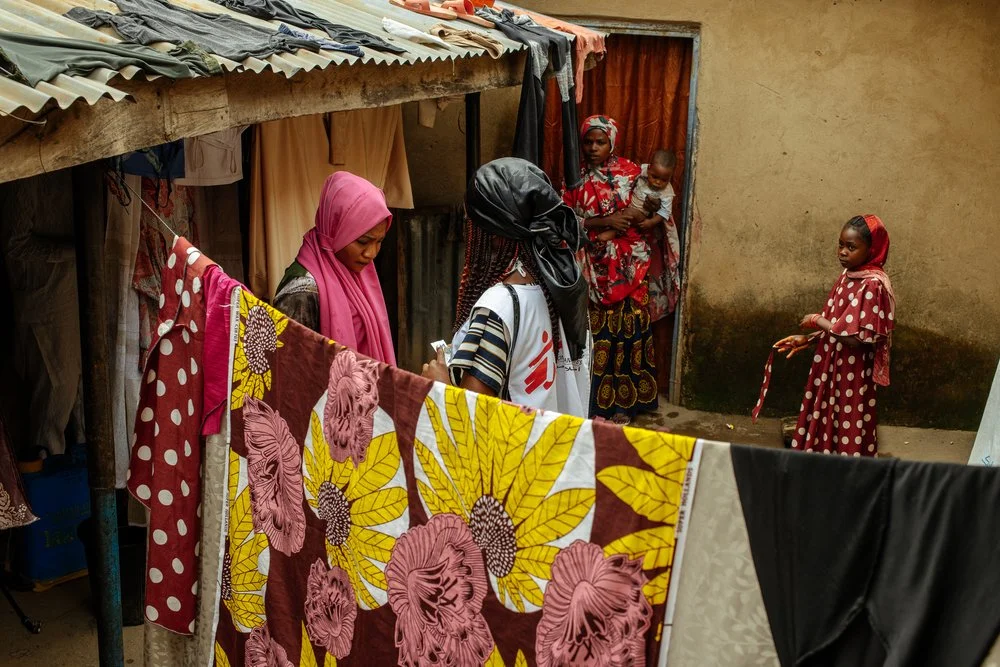
© MSF Hussein Amri. Nigeria. 2021.
What's next?
The study in Walikale showed that new products like menstrual underwear can make a real difference, but products alone are not enough. To sustain dignity and confidence, women and girls also need supportive environments, safe facilities, and accurate information.
That is why the next phase of MSF Inclusive Innovation’s work will focus not only on providing products, but also on health education and promotion. Women and girls told us that silence around menstruation leaves them with unanswered questions, fear, and stigma. Building spaces for open discussion, accurate knowledge-sharing, and participatory learning will be critical to breaking the taboo and helping communities manage menstruation with dignity.
MSF Inclusive Innovation is now drawing on the lessons from Walikale to inform a Menstrual Health Toolkit. The toolkit will combine practical products and facility guidance with adaptable health education and behaviour change approaches, ensuring that menstrual health programming does not just meet immediate needs but also shifts harmful norms over the long term.
Because dignity in menstruation means more than access to products, it means knowledge, confidence, and the freedom to live without silence or shame.
For more information about our MHM work, check out our earlier article about why this is a topic that demands our attention and our approach to improving MHM in humanitarian contexts.