
Why We're Reimagining Breastfeeding Support in the Places That Need It Most
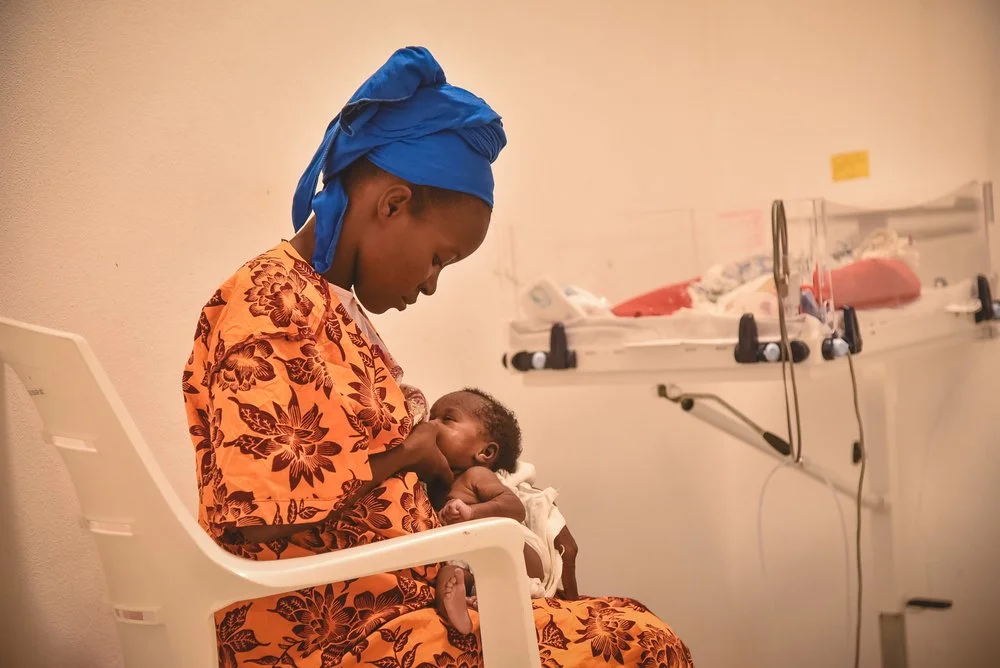
Jenneh Kamara breastfeeding her two-week-old baby inside the isolation ward of the Neonatal Intensive Care Unit (NICU) at the MSF-supported Government Maternity and Children’s Hospital in Hangha, Kenema District, Sierra Leone. © Mary Dumbuya/MSF, 2026
Every year, more than 820,000 child deaths are linked to suboptimal breastfeeding. It's one of the most powerful, lowest-cost, lifesaving interventions available to us, and yet, in many of the places MSF works, it remains out of reach for many mothers.
This World Breastfeeding Week, we want to share why breastfeeding support is a priority for MSF, and how Inclusive Innovation, a collaboration between the innovation team at the Manson Unit in MSF UK and the MSF Sweden Innovation Unit, is supporting the important work now underway to change how we deliver it.
Why breastfeeding matters
In humanitarian contexts marked by conflict, displacement, food insecurity and unsafe water, breastfeeding isn't just beneficial, it's protective in a way few other interventions can match. It directly reduces diarrhoeal disease, respiratory infections and malnutrition in infants. And where clean water is scarce or unreliable, breastfeeding removes the need for breastmilk substitutes that are often difficult, or even dangerous, to prepare safely.
Put simply: breastfeeding saves lives in exactly the settings where MSF works.
A gap in our own house
Despite knowing all this, breastfeeding support within MSF has historically been fragmented and inconsistently prioritised. Mothers tell us they face limited practical support, facilities without private or comfortable spaces to feed their babies, stress, insufficient family support, and persistent misinformation. Our own staff often lack consistent operational guidance on how to help.
We feel the consequences of this gap every day, operationally: higher caseloads of severe acute malnutrition, more paediatric admissions, greater reliance on breastmilk substitutes and therapeutic feeding, and avoidable pressure on services that are already stretched thin.
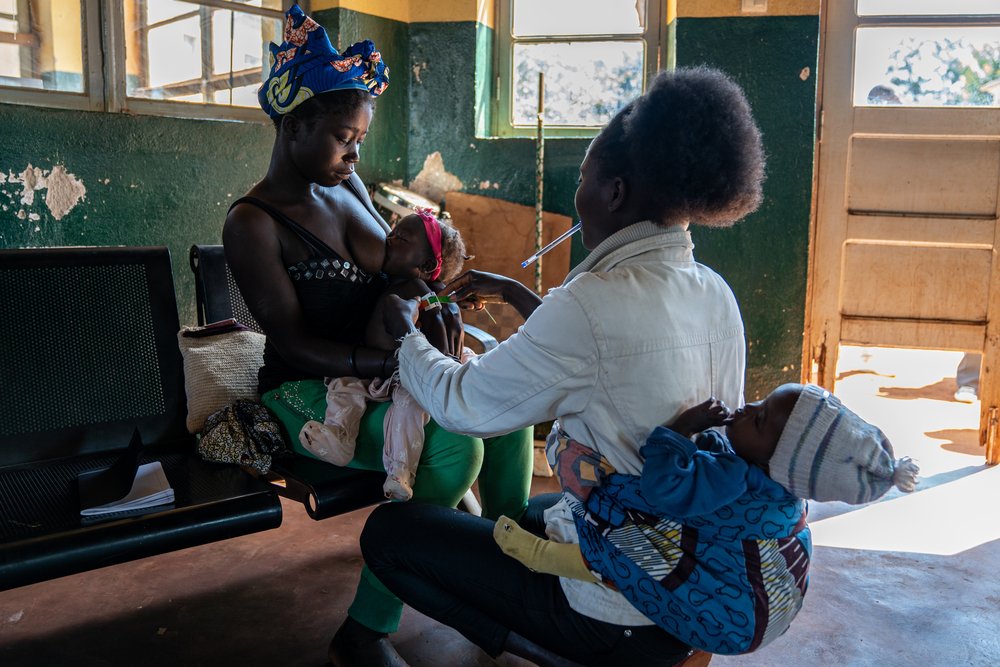
A child is screened for malnutrition in Cuvango, Huila province of Angola, by Joana, community health worker. © Mariana Abdalla/MSF, 2023
How we're working on breastfeeding
In 2025, MSF's Inclusive Innovation (II) team began investing in a dedicated Breastfeeding Portfolio, working hand in hand with the MSF Intersectional Breastfeeding Initiative (BI). The two teams bring complementary strengths: BI contributes deep technical and clinical expertise from across MSF's sections and sectors, while Inclusive Innovation brings experience in participatory, human-centred design, to ensure that the interventions implemented respond to the reality of the mother and babies we meet in our facilities.
Together, we've been asking one guiding question: how might we create the conditions for breastfeeding to be prioritised, supported and protected for mothers and babies in every country where MSF works?
Some of the ideas taking shape
Through this collaboration, we've defined five complementary intervention packages designed to work together, rather than in isolation:
Staffing, training and capacity building: giving healthcare workers, nutrition staff and peer supporters unified standards and practical, hands-on breastfeeding counselling skills.
Family-centred awareness and counselling: coherent, reliable information for mothers, fathers and families across the whole maternal journey.
Environment and facilities: private, comfortable, breastfeeding-supportive spaces and equipment in MSF facilities.
Community engagement and peer support: building on the informal support networks mothers already rely on, including peer supporters and breastfeeding champions.
Internal protocols, policies and indicators: a unified framework so we can guide teams consistently and track outcomes across the movement.
How we arrived at these packages
These packages weren't designed behind a desk. They emerged from an extended period of exploratory research and ideation, grounded in the lived experience of the people who face these challenges directly: mothers, fathers, families, communities and frontline staff.
Through interviews, focus group discussions, journey mapping and community consultations, we worked to understand the real barriers to breastfeeding, and to surface ideas and priorities that a standardised, top-down approach would likely have missed. Particular attention was paid to the experiences of the most vulnerable: women affected by displacement, conflict, poverty, illness or social exclusion.
“‘But because my mind is not calm — I always worry about poverty and the future of my children — sometimes I do not pay proper attention to feeding my child. It is unintentional, not on purpose.’ ”
In ideation sessions and workshops, we built on what we learnt and co-created the five interventions packages that will now be prototyped and tested.
This participatory process is central to how Inclusive Innovation work. Rather than parachuting in solutions, we engage the people who will use and deliver them at every stage, design, implementation and evaluation, so that what we build is genuinely relevant, acceptable and effective.
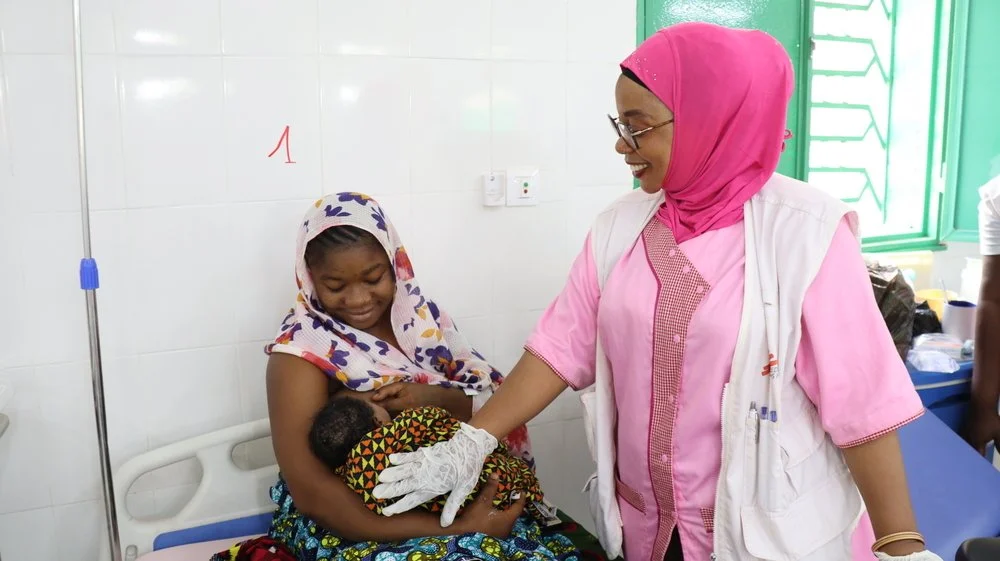
A mother is introduced to breastfeeding practice after her first child’s delivery. © Saïda Doumbia/MSF, Burkina Faso 2024
Where we are now
The exploration and ideation phases of this work are now complete. We're ready to move from concept to implementation.
That means we're now planning to test and roll out these intervention packages. Over the coming months, we'll be securing implementation funding, working with the Breastfeeding Initiative to select which packages to prioritise at which sites, developing roadmaps, and beginning site-readiness conversations with Operational Centres, missions and projects. From there, we're aiming to pilot these interventions in selected MSF projects, with ongoing monitoring and iterative adaptation, before evaluating feasibility and impact and sharing operational guidance and training packages for wider scale-up across the movement.
Why this matters, and what we're asking
Every mother supported to breastfeed successfully means an admission prevented, a substitute avoided, and pressure lifted from our nutrition and paediatric services. It's a frontline humanitarian nutrition and child survival intervention, and one of the most cost-effective tools we have.
This World Breastfeeding Week, we're asking colleagues across MSF to engage with this work: to help us choose the right sites, build operational buy-in, and make breastfeeding support a routine, reliable part of how MSF delivers care.